Local SEO tooling for people who do this for a living
Whether you freelance, consult, or run local SEO in-house, your reputation rides on results you can prove. SearchOps puts agency-grade tooling in one place at a solo-operator price: geo-grid rank tracking, GBP audits, review monitoring, and SERP plus AI answer-engine visibility. Win new clients with an audit that shows you know your stuff, deliver every month without a stack of subscriptions, and turn the underlying data into original research that brings the next client to you.

The problem
You're the whole agency. On one person's budget.
As an independent SEO you carry every role at once: pitching, auditing, delivery, reporting, and staying visible enough that the next client finds you. Most of the tooling built for this is priced for agency teams and billed per seat, so a solo operator pays enterprise rates for a fraction of the value. And the one thing that actually wins you work, evidence that you get results, is exactly what a stack of disconnected dashboards makes hardest to produce.
Agency tools are billed per seat and per team. As a freelancer or small consultancy you subsidise features built for ten-person departments.
Winning work comes down to proving expertise fast. A sharp audit in the first call converts better than any deck, but only if you can produce one in minutes.
Client delivery means juggling several businesses at once. A separate login per tool per client turns reporting week into lost billable days.
Your best lead source is your own authority. Publishing real data builds it, but gathering that data at any scale rarely fits a freelancer's time or budget.
How SearchOps fits
One platform for winning, delivering, and standing out
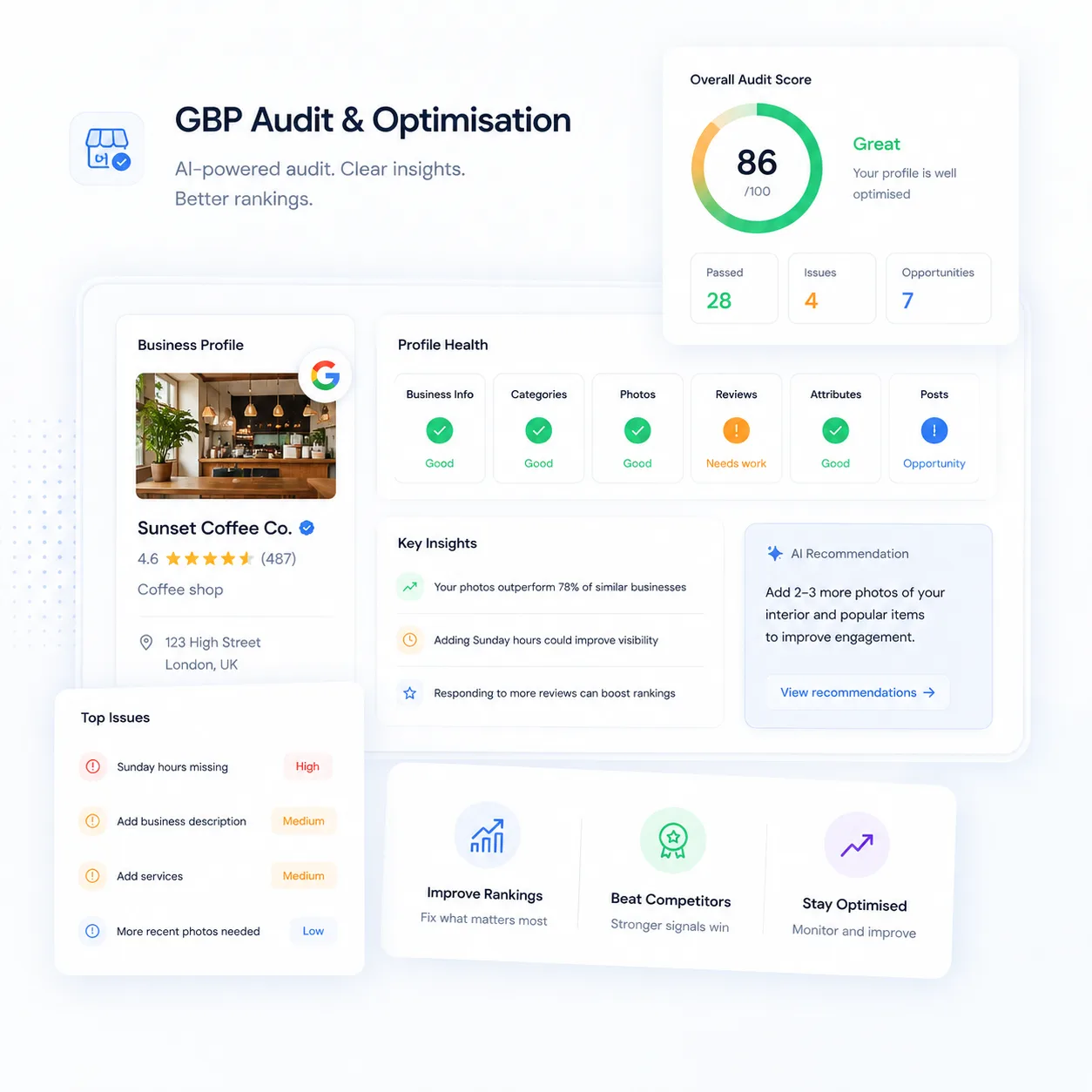
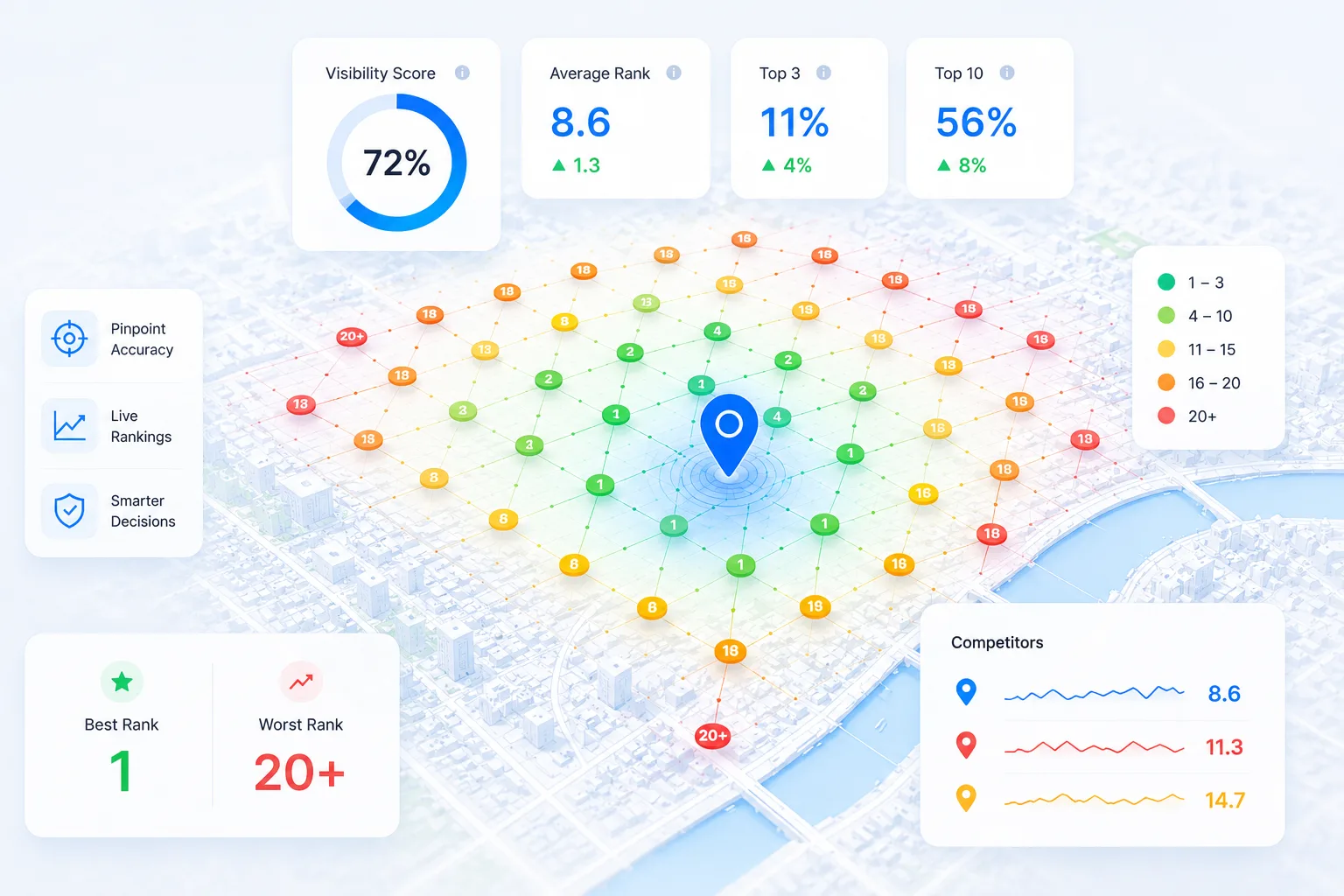
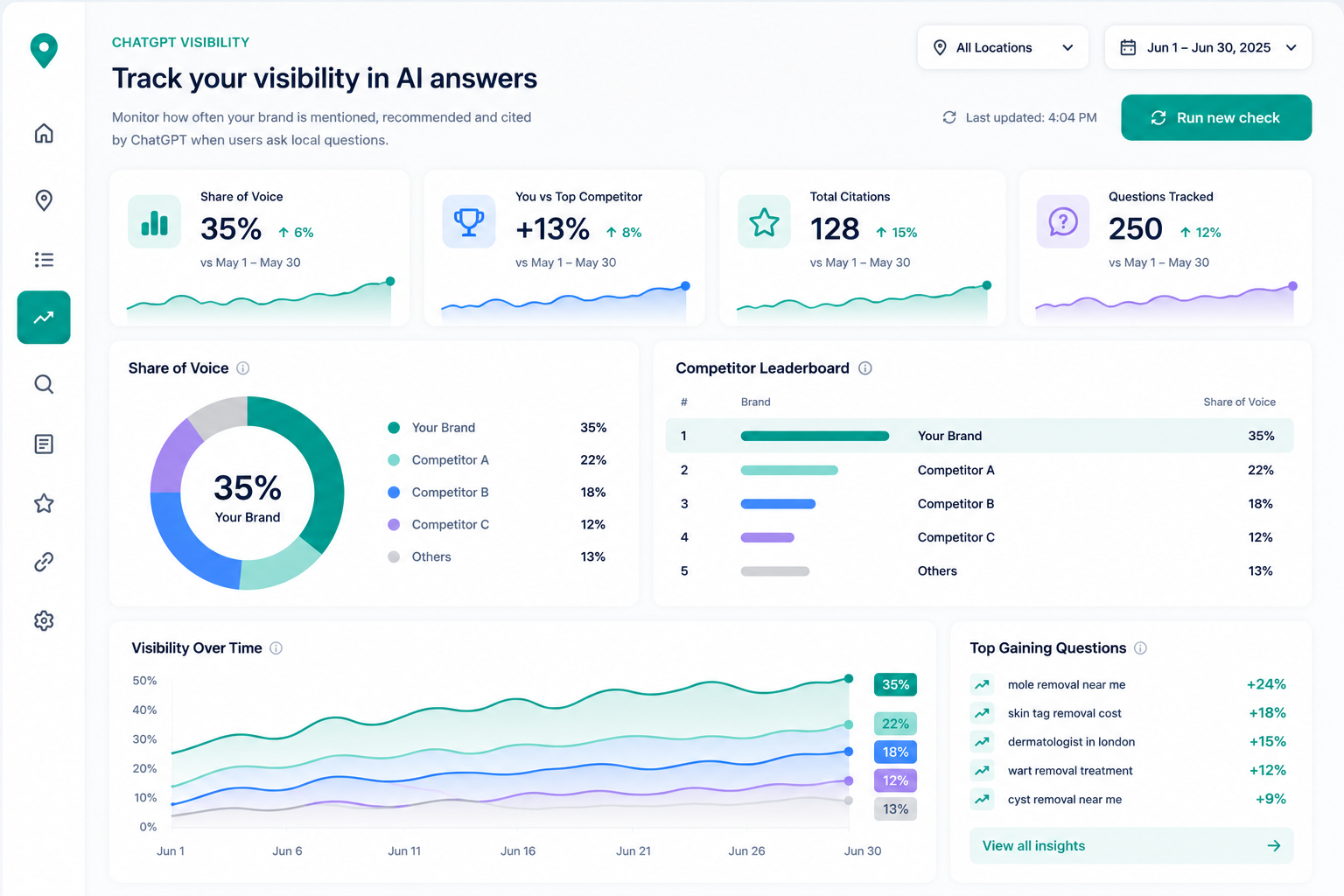
SearchOps runs your whole practice from a single login. Pull a geo-grid scan and a GBP audit before a pitch and walk in with findings, not guesses. Track every client's rankings, reviews, and AI visibility side by side, then export client-ready reports without stitching four tools together. And because the same scans quietly build a dataset that isn't available publicly, a quarter's work becomes an original study or a data-driven post that earns links and inbound leads. Priced per location, not per seat, so it scales with your client book instead of your headcount.
Playbook
How independent SEOs build a practice that compounds
The freelancers and consultants who thrive at this treat the three parts of the job as one loop: research builds authority, authority wins clients, client work generates more data. Here's how to run that loop on purpose.
- 1
Lead the pitch with an audit, not a proposal
Run a GBP audit and a geo-grid scan on a prospect before the first call. Walking in with 'here are the three things costing you calls right now' converts far better than a list of services. It reframes you from vendor to expert in the first five minutes, and it takes minutes to prepare.
- 2
Price per outcome, not per hour
Hourly billing caps your income at your own capacity and punishes you for getting faster. Package local SEO as a fixed monthly retainer per location or per client. Efficient tooling then drops straight to your margin instead of shortening your invoice.
- 3
Standardise delivery so one person scales
Templated onboarding, a scheduled monthly scan, and an export-and-send report cadence let you carry more clients without more hours. Set scans to run overnight and the monthly report becomes a review, not a rebuild.
- 4
Run every client from one dashboard
Add each client as a location and watch rankings, reviews, and AI visibility side by side. No separate login per client per tool. When a client's rank slips you see it before they email you, which is often the difference between a renewal and a churn.
- 5
Make AI visibility your differentiator
Most freelancers still report Google rankings and nothing else. Bringing a client a read on how they show up in ChatGPT and Gemini answers positions you a step ahead of the field and justifies the retainer on its own. It's the easiest way to look a year ahead of the competition.
- 6
Publish one data study a quarter
Your own scan data, aggregated and anonymised, can power a ranking-factors post, a local sector benchmark, or a state-of-local-AI-search piece. Original data gets cited and linked in a way opinion pieces never do, and those links bring prospects to you instead of you chasing them.
- 7
Show the method, protect your edge
When you publish, share the sample size, markets, and dates so the work is credible and reproducible in principle. You don't need to explain how the data is gathered. That transparency earns a reader's trust while keeping your process yours.
- 8
Turn client wins into reusable proof
A geo-grid heatmap that goes from mostly grey to mostly green over six months is the most persuasive sales asset you can own. Anonymise it and it becomes the case study that wins the next three clients.
FAQ