Local SEO that pays for itself the first month
When 70% of your customers start their journey on Google Maps or a local search, every ranking slip costs real money. SearchOps gives small and multi-location businesses the same tooling agencies use, priced for people who actually pay attention to their own margins.

The problem
Local search is more fragile than it looks
You'd think a good Google Business Profile and a handful of reviews would be enough. For years, it was. Today, rankings change street by street, a single category tweak can move you four places, and new AI answers above the organic results are quietly eating clicks that used to be yours. Most local businesses only find out they have a problem when the phone stops ringing.
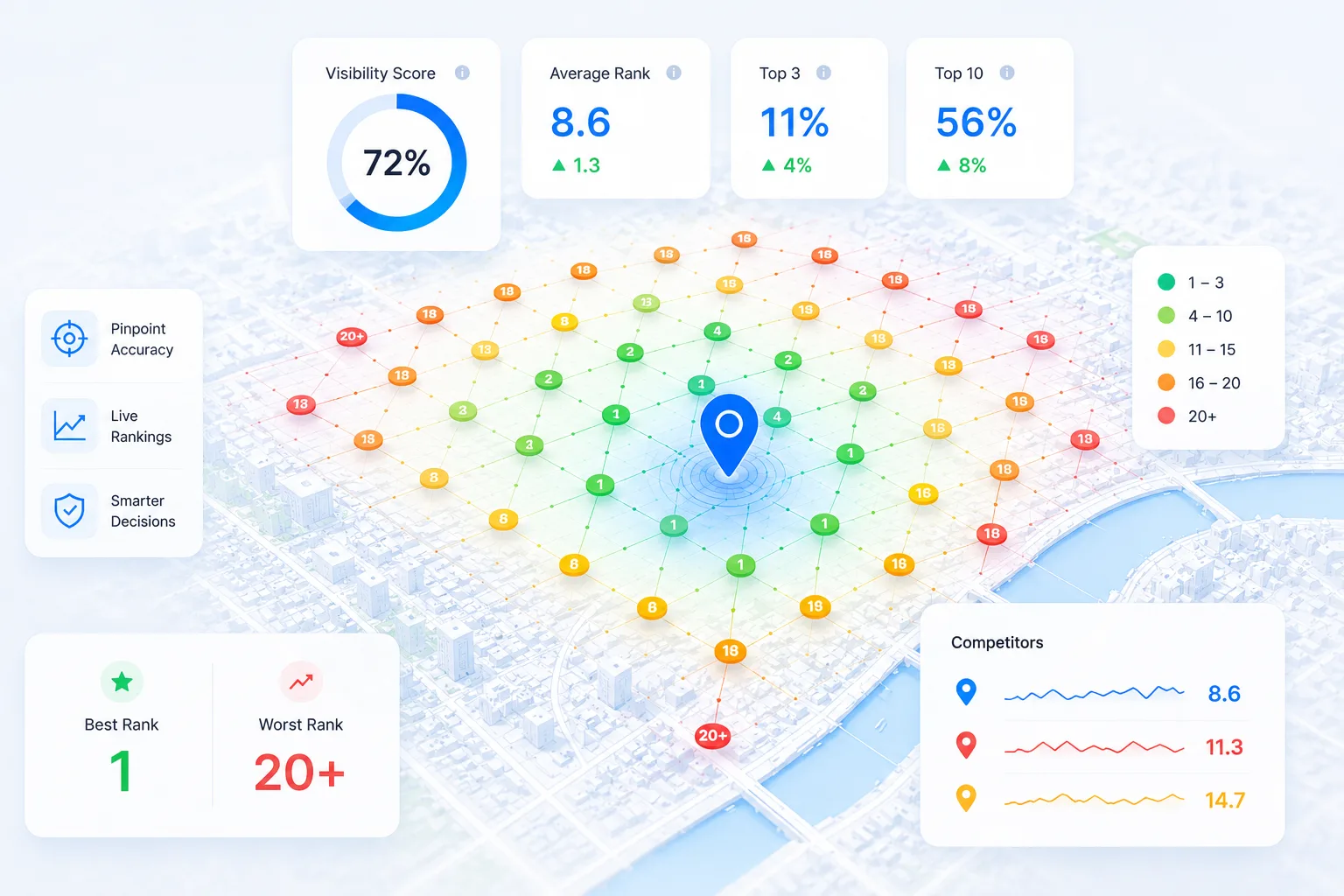
Ranking from a single pin on Google gives you one number that hides a dozen different truths across your service area.
AI Overviews and AI Mode push organic results further down the page; you need to know whether you're cited in those answers too.
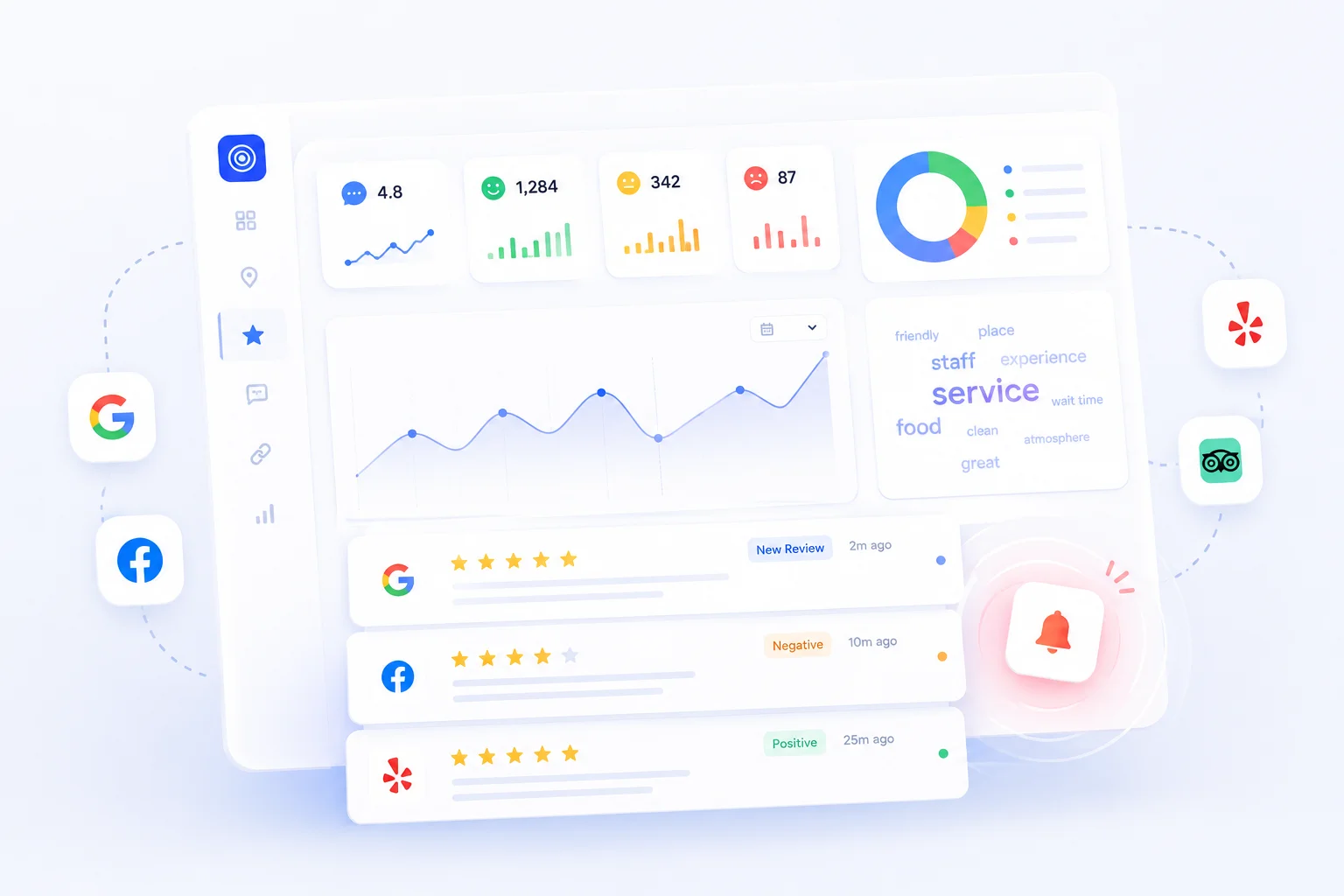
Reviews compound. Missing a run of bad ones for a week can move your star rating for months.
Most tools are built for agencies with agency budgets. You need something priced for a business with real margins.
How SearchOps fits
One platform, credit-based, no feature upsells
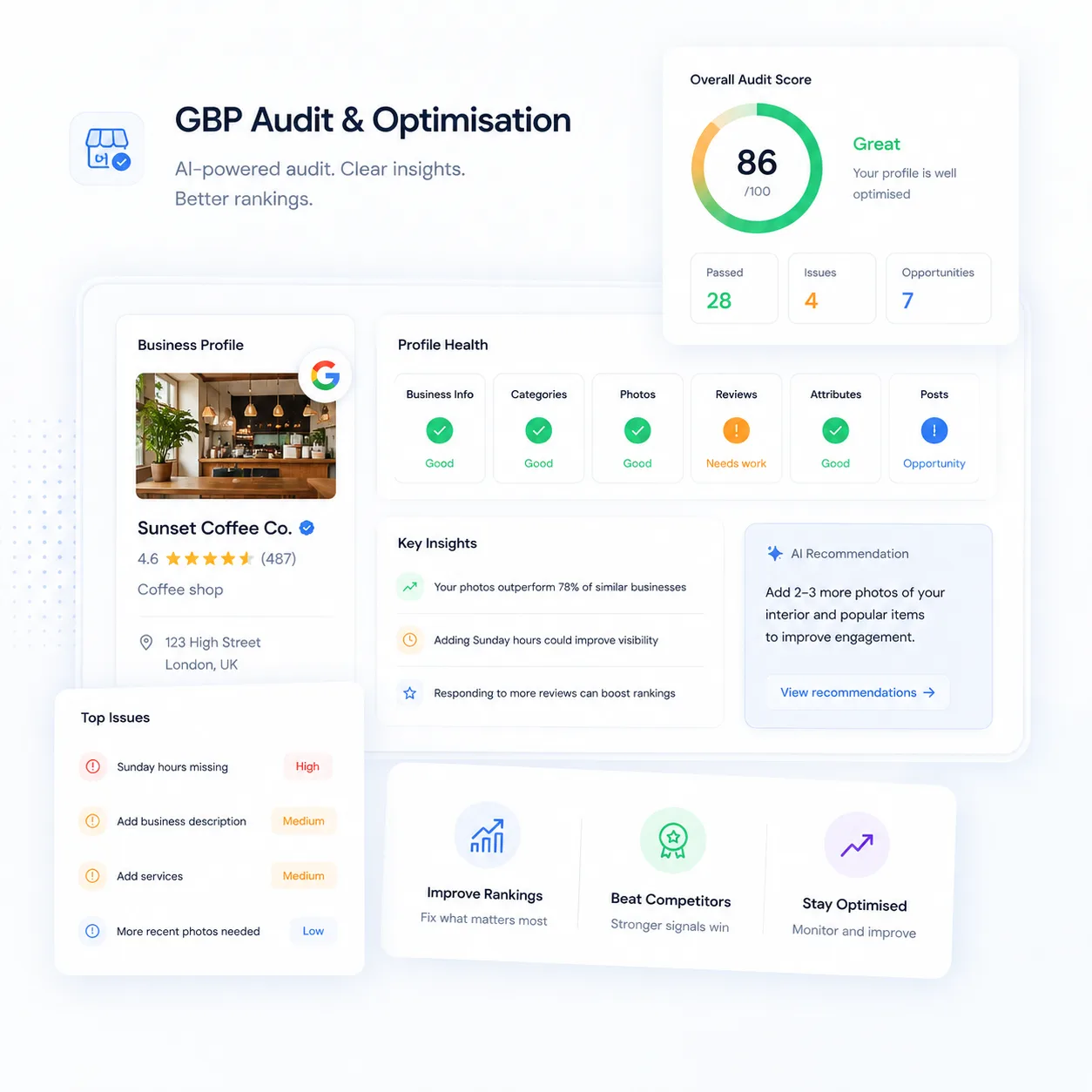
Pick any plan to scan rankings, track keywords, run audits, and generate agent-drafted replies from day one. Billed monthly, and you can cancel anytime. No feature gates and no long contracts. If you outgrow your plan you upgrade; if you don't, you don't.
Playbook
5 local SEO wins for small businesses
You don't need a full-time SEO team to compete on local search. These are the fixes that move rankings for almost every small business, in roughly the order you should tackle them.
- 1
Get your primary GBP category right
Your primary category is the single biggest lever you control. A plumber set to 'plumbing service' will rank very differently from one set to 'plumber'. Audit it, check what the top three local competitors are using, and pick the most specific match to the service you want to rank for.
- 2
Run a geo-grid scan for your top keyword
One rank number is almost useless. A geo-grid scan across your service area will show you exactly which streets, postcodes, and neighbourhoods you dominate and which ones you're invisible in. That map is your entire marketing plan for the next three months.
- 3
Respond to every review inside 24 hours
Google weighs recency and engagement heavily. A slow trickle of recent reviews, each with a short thoughtful response, outperforms a stale wall of five-stars from two years ago. Set up alerts so you never miss one, and draft a short response within a day.
- 4
Fill your Services, Products, and Attributes
Most businesses leave these fields blank. They're effectively free keyword real estate. Every service you list is another query Google can match you against. Spend an hour getting these right and you'll usually see movement within a fortnight.
- 5
Check your AI search presence monthly
A growing share of local queries get answered above the organic results now, either by Google's AI Overviews or in AI Mode. If your site isn't among the cited sources, that click never lands on you. Track it monthly so you spot drops before your traffic does.
FAQ