Branch-level SEO for estate agents and property managers
Real estate is hyper-local. A buyer searching 'estate agents in Clapham' wants results in Clapham, not an aggregator servicing all of London. Every branch lives and dies on its own local ranking, and most estate agencies undermanage the single asset that drives their walk-ins and phone calls.

The problem
Every branch is its own local SEO problem
An estate agency with 15 branches has 15 entirely separate local SEO problems. The Clapham branch competes with a dozen Clapham competitors; the Leeds branch competes with an entirely different dozen. A single chain-level SEO strategy misses the nuance of every branch, while hiring an agency per branch blows the budget.
Each branch has distinct local competitors. No generic strategy wins all of them.
Aggregators (Rightmove, Zoopla) dominate a chunk of real estate searches, but not all of them.
Branch-level GBPs are frequently stale; hours, photos, and staff churn constantly.
Reviews vary wildly by branch. One office's reputation can drag down the brand's average.
How SearchOps fits
Per-branch visibility, roll-up reporting, no per-location fees
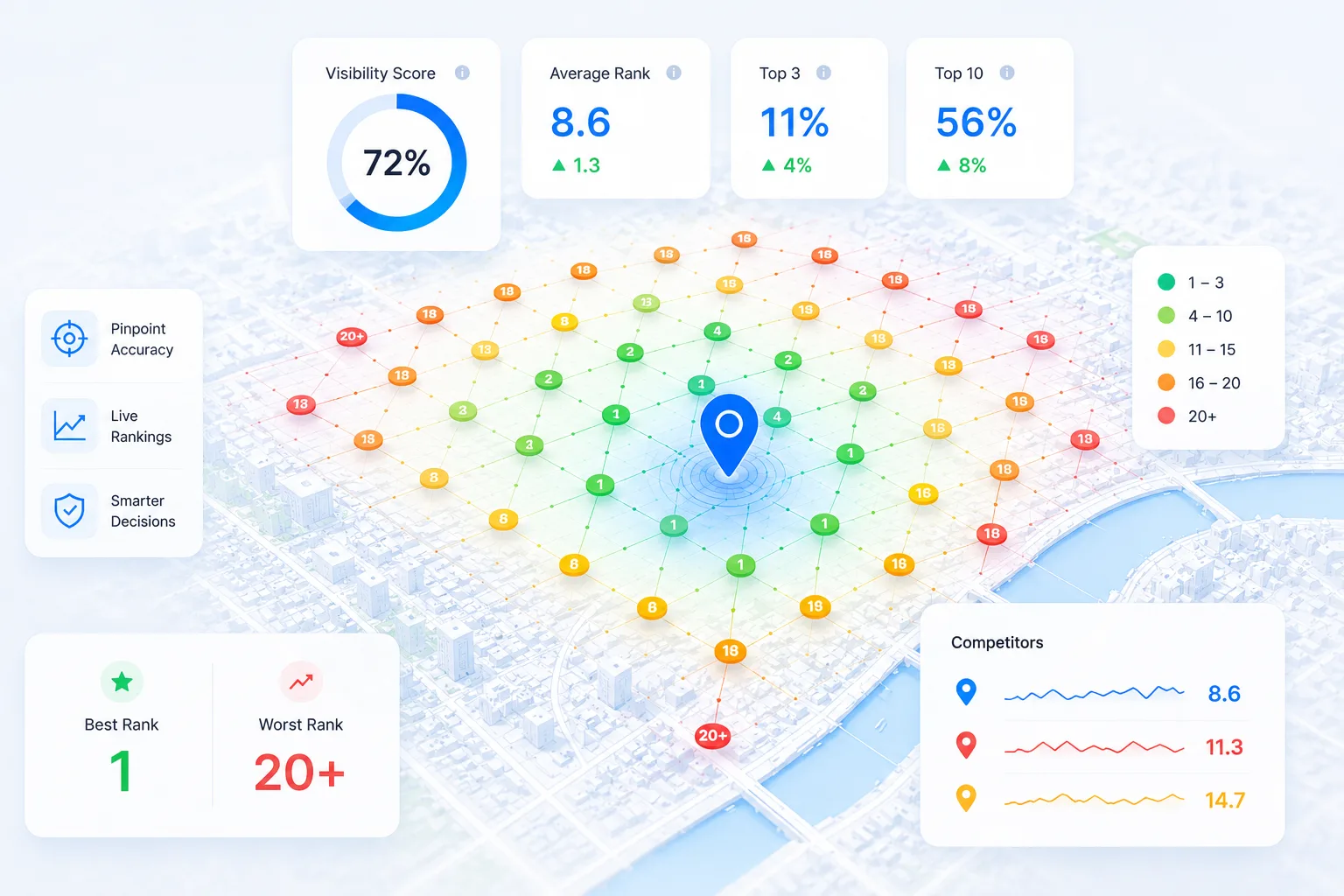
Every branch gets its own geo-grid, GBP audit, and review dashboard. Roll-up reporting shows the chain-level view for the leadership team. No per-location fees on Agency and Enterprise plans. Add a branch, it's covered.


Playbook
Branch-level SEO for estate agents
Estate agency local SEO is about getting every branch right, not fighting for a chain-level average. These tactics work whether you have one branch or 100.
- 1
Treat every branch GBP as a mini-website
Each branch needs its own complete profile. Branch manager, opening hours, photos of the actual office, services specific to that area (lettings focus, new builds, commercial). Generic chain-level copy pulled across all branches is a dead giveaway to Google.
- 2
Ask for a review at the moment of exchange
Buyers and renters are at peak positive sentiment on the day they complete. A thank-you card with a QR code to Google reviews, handed over with the keys, converts at 5x the rate of a follow-up email a week later.
- 3
Run a quarterly grid scan for 'estate agent in {area}'
Real estate search intent is dense and postcode-specific. A grid scan across your branch's catchment tells you which streets you own and which ones are owned by competitors. That's your geographical target list for door-drops, local PR, and content.
- 4
Feature individual agents on the GBP
Buyers and renters often search for the agent who helped their friend ('{first name} at {branch}'). Listing individual agents as staff with their photos and names creates a real local moat. And if they leave, you just update the profile.
- 5
Keep photography fresh with sold and let listings
Posting photos of the latest sales and lettings. With addresses generalised to the street level for privacy. Generates a constant stream of fresh, locally-tagged content Google rewards. A quarterly dry spell on photos immediately shows up in your rankings.
FAQ