How law firms and professional services win local SERPs
One new client case for a law firm is worth a year of another business's turnover. That makes the local SEO stakes absurd, and the competition equally so. Winning isn't about volume, it's about being the first result a prospective client sees the moment they decide to act.

The problem
High-stakes clients don't shop around. They decide in five minutes.
A prospect searching for a divorce solicitor, a tax accountant, or a personal injury lawyer makes a decision fast. Often in the first sitting. They read two or three top Google results, check reviews, and book a consultation. If your firm isn't in those two or three, you don't get the chance to compete.
Local pack competition is brutal. Three slots for dozens of firms in any metro.
Review volume and specificity matter enormously; 'thoughtful and kind' converts better than 'great'.
AI answers are increasingly summarising legal and financial queries above the organic results.
Category choice matters more than in any other vertical. 'law firm' and 'personal injury attorney' produce completely different rankings.
How SearchOps fits
Visibility across every surface, including AI
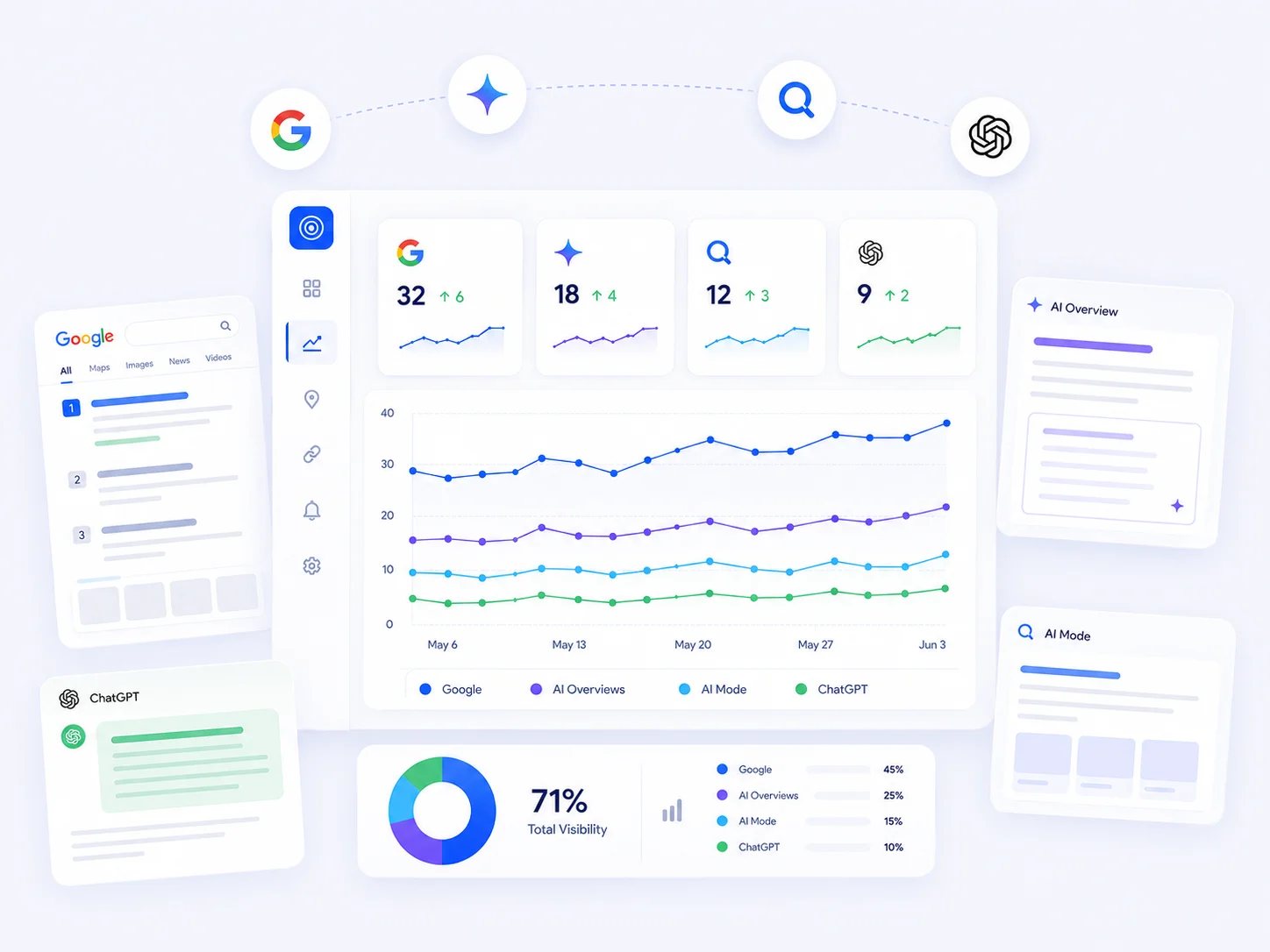
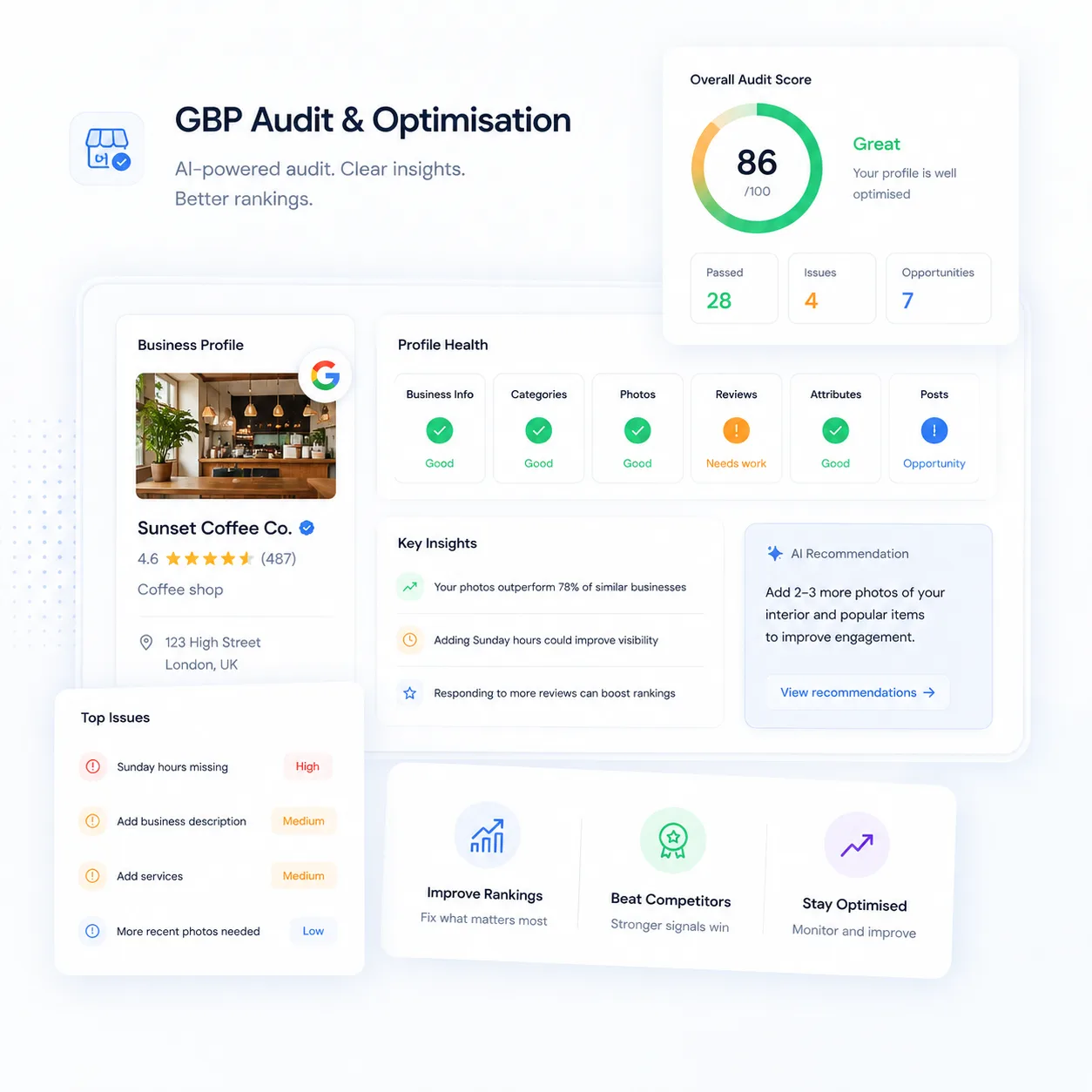
Track classic SERPs, the local pack, AI Overviews, and Google's AI Mode from one dashboard. Monitor firm-level reputation and respond within hours, not days. Audit your profile so the review your prospect reads lands on a complete, convincing page.

Playbook
How law firms win local SERPs
Legal and professional services have a narrow set of high-value queries and a lot of firms chasing them. These are the tactics that actually move rankings when every competitor has already nailed the basics.
- 1
Choose the most specific practice category
A 'law firm' category matches every legal query and ranks for none of them competitively. 'Personal injury attorney', 'divorce attorney', 'tax attorney' each rank in their own local pack. Pick the one that maps to your best-margin practice area as primary, use secondaries for the rest.
- 2
Ask for detail, not just stars
A five-star review that says 'great!' converts worse than a four-star review that says 'Sarah walked us through the mediation step by step and was available when we had questions'. Train your client intake team to specifically ask for a sentence about what stood out.
- 3
Track AI Overviews for your practice area queries
AI answers are increasingly summarising legal questions ('what is a no-fault divorce?') above any organic result. If your site isn't being cited, you're invisible. Monitor which sites Google cites and build towards parity. FAQ pages, plain-language guides, and clear authorship are the three main levers.
- 4
Build a location-specific page for every practice area × city
Ten core practice areas × ten metros you serve = 100 landing pages. Most firms have 10. Each one can rank for 'practice area + city' long-tail queries that the main office page will never touch. Template them carefully and Google treats them as distinct pages of real value.
- 5
Respond to reviews with the kind of language a prospect will read
Prospective clients read your responses as carefully as the review itself. A thoughtful response to a 3-star review signals professionalism more than the 200 five-stars above it. Skip the canned 'thanks for the feedback' template. Write like a human.
FAQ