Local SEO for accountancy practices that need new clients, not more leads
Accountancy is referral-led, but the first thing a referred client does is Google the firm. They read reviews, scan the profile, check whether you look like someone their uncle described, and only then do they book a discovery call. If the top result of that name search isn't flattering, you lose clients you'd already 'won'.

The problem
Referrals are where clients start. Google is where they confirm.
An accountancy client introduced by word-of-mouth still Googles your firm name before they dial. They read three reviews, look at whether the profile looks up to date, and judge quietly. Stale photos, unanswered complaints, or a rank that points them to a competitor with a similar name are how you lose clients who'd already decided to use you.
Every new enquiry Googles the firm name before booking. That branded search is where deals are won or lost.
Local pack for 'accountant near me' is increasingly eaten by AI Overviews citing firms with strong content.
Most practices pick 'Accountant' as primary and miss every 'tax advisor', 'bookkeeper', 'payroll service' pack.
Partnerships and mergers leave multiple stale GBP listings that confuse both search engines and prospects.
How SearchOps fits
Protect the branded SERP, win the niche packs
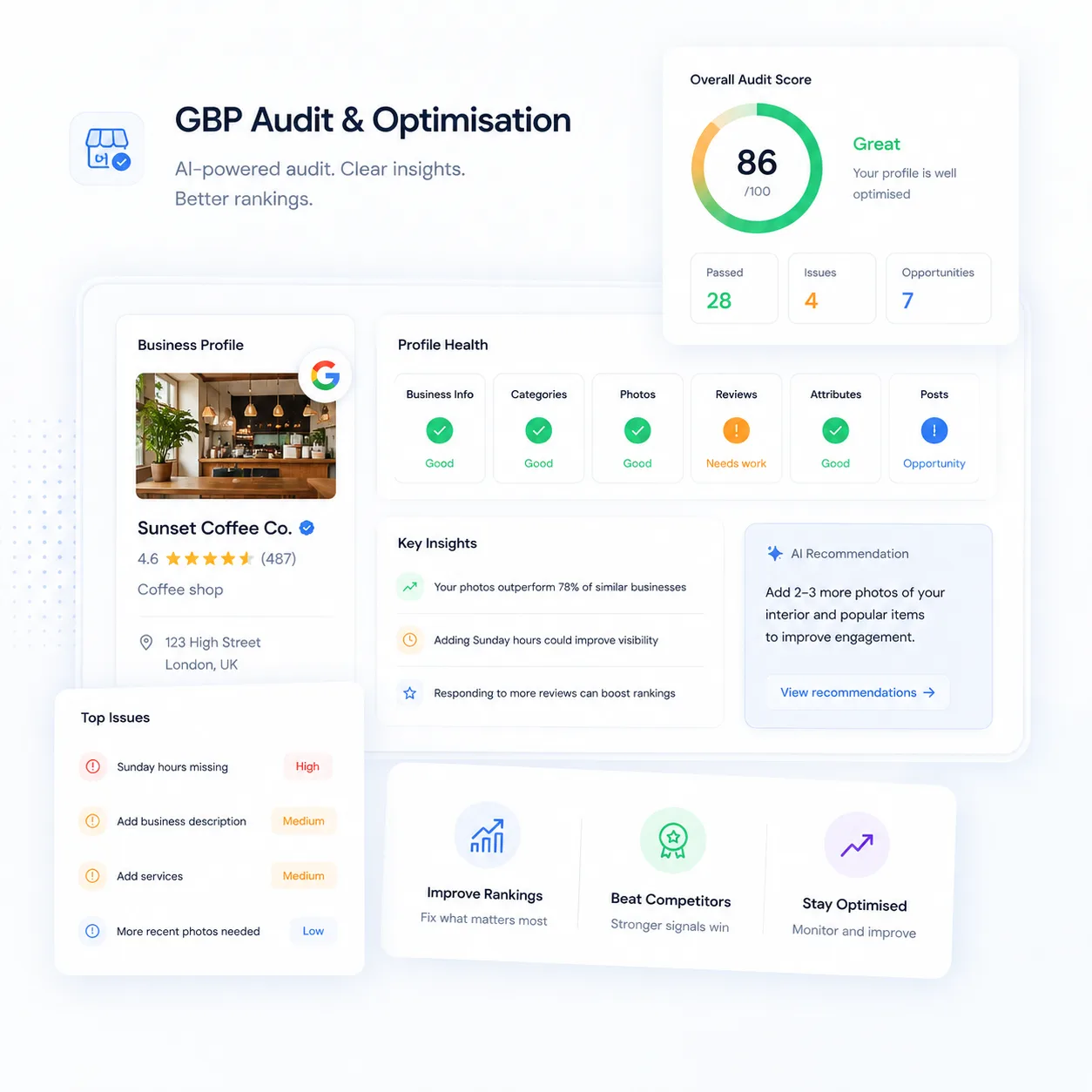
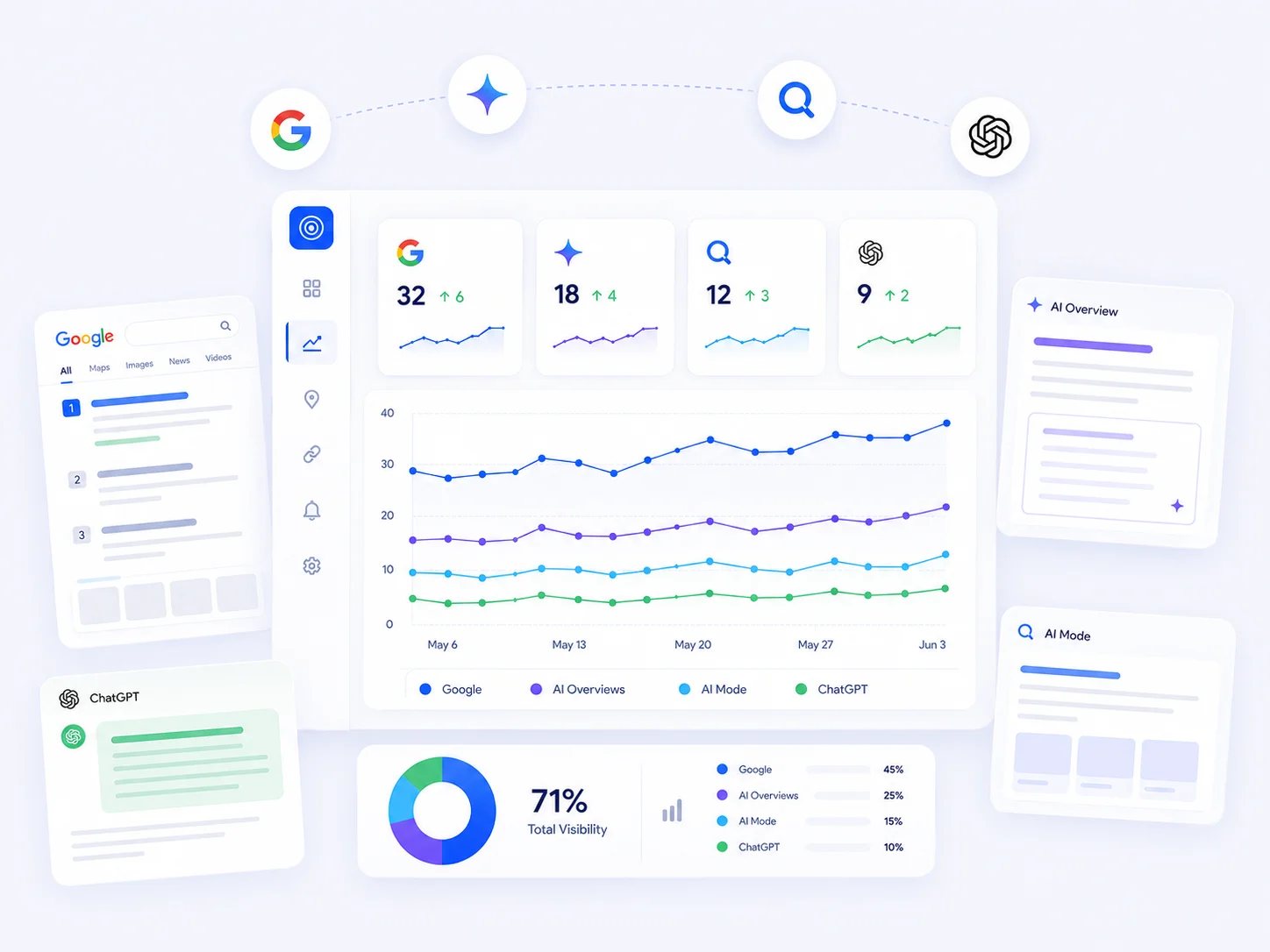
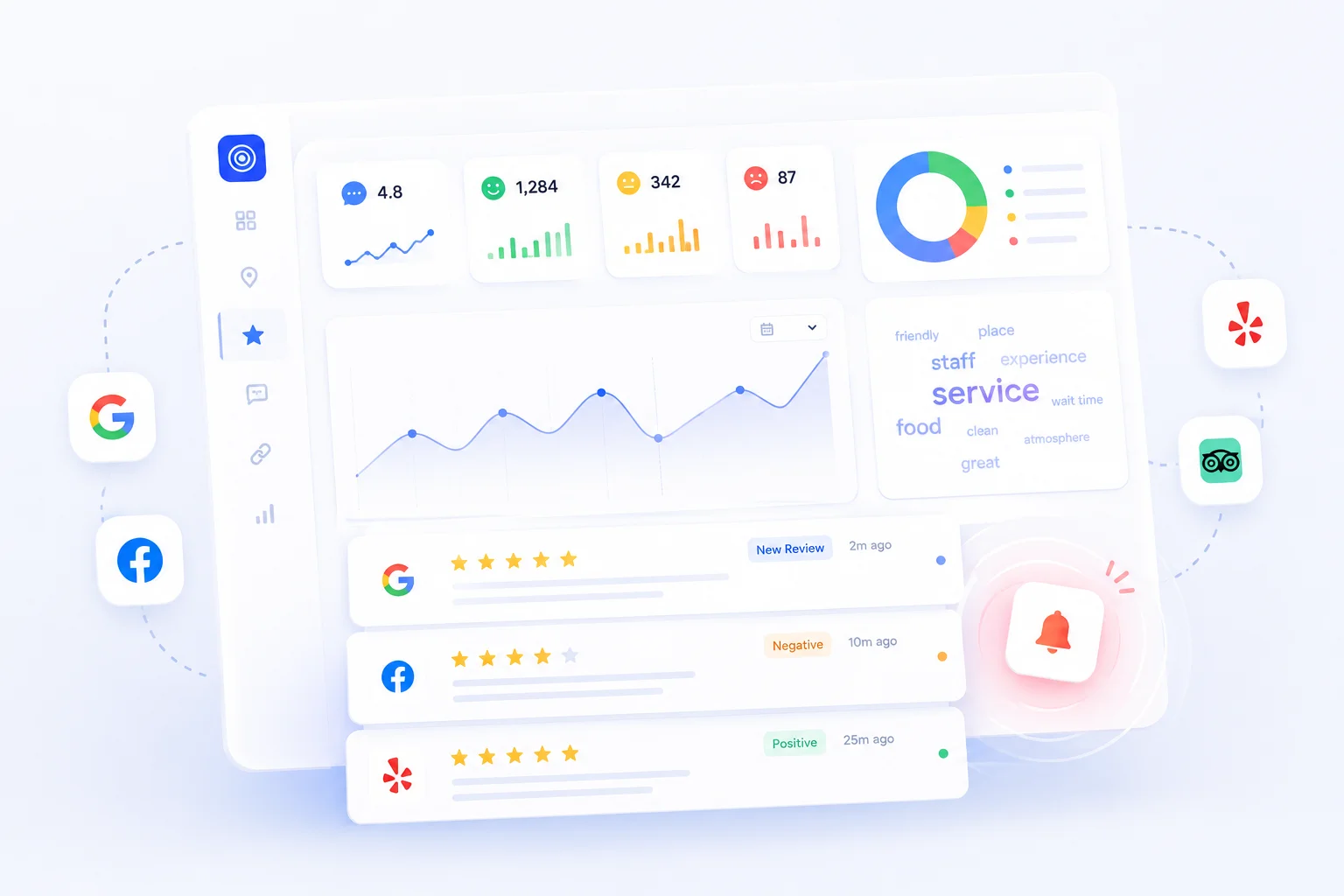
AI and SERP tracking covers the branded firm search and the 'accountant near me' pack together. Review monitoring catches every new review the same day so your partner can respond before a one-star sits untouched for a fortnight. GBP audits flag the stale partner photos and missing services that quietly undermine credibility on a prospect's first visit.
Playbook
Local SEO for accountancy practices
Accountancy is a trust-first service. These tactics protect the referral pipeline and open up the local pack without pulling partners into 'content marketing'.
- 1
Pick the most specific primary category
'Tax preparation service', 'Bookkeeping service', and 'Accountant' each rank in different packs. A self-assessment-focused practice picking 'Tax preparation service' as primary wins a set of queries 'Accountant' never reaches. Audit what your top competitors use, then be more specific if you can.
- 2
Get reviews that mention the service, not 'great firm'
A five-star 'lovely team' review ranks for nothing. A four-star 'Sarah sorted our Self Assessment and explained MTD in plain English' ranks for Self Assessment queries, MTD queries, and Sarah. Train your client managers to ask reviewers for a sentence about what specifically helped.
- 3
Claim and merge any ghost listings from past partnerships
Almost every older practice has a dormant GBP from a former partner name or old address. Those ghost listings split reviews, confuse Maps, and sometimes outrank the live profile for the firm's own name. Claim each one and either update it or request removal.
- 4
Track your own firm name as a branded search
The highest-converting search a prospect runs is your firm name after a referral. If anything unflattering ranks on that SERP — an old Glassdoor thread, an ancient news piece — you're losing clients silently. Monitor the branded SERP and defend it.
- 5
Publish a short guide per service for AI Overviews
AI answers on queries like 'what is MTD' or 'when do I need to register for VAT' cite authoritative sources with structured, plain-language content. A 600-word guide per service, on your firm's domain, with named partner as author, shows up in those citations more often than any home-page copy ever will.
FAQ