Local SEO governance for brands with dozens of locations
Running 50, 500, or 5,000 locations is a different problem. It isn't about picking the right rank tracker. It's about keeping category taxonomies consistent, catching regression at one branch before it spreads to ten, and reporting that rolls up cleanly for leadership.

The problem
Scale introduces problems single-location tools weren't built for
When you have 300 locations, a single typo in a category taxonomy propagates into 300 slightly-wrong profiles. A rank regression at one branch gets lost in a roll-up average. Your regional managers want per-site dashboards; your executive team wants one number. Most local SEO tools optimize for the single-site user and leave the rest to spreadsheets.
Category and attribute taxonomies drift across locations without governance controls.
Regression detection averages out at scale. A single branch falling off the map is invisible in a portfolio view.
Managers need location-level dashboards; leadership needs rolled-up numbers. Most tools can't do both.
Data governance, SSO, and audit trails are non-negotiable but often cost extra on 'starter' enterprise tiers.
How SearchOps fits
Built for multi-location from the ground up
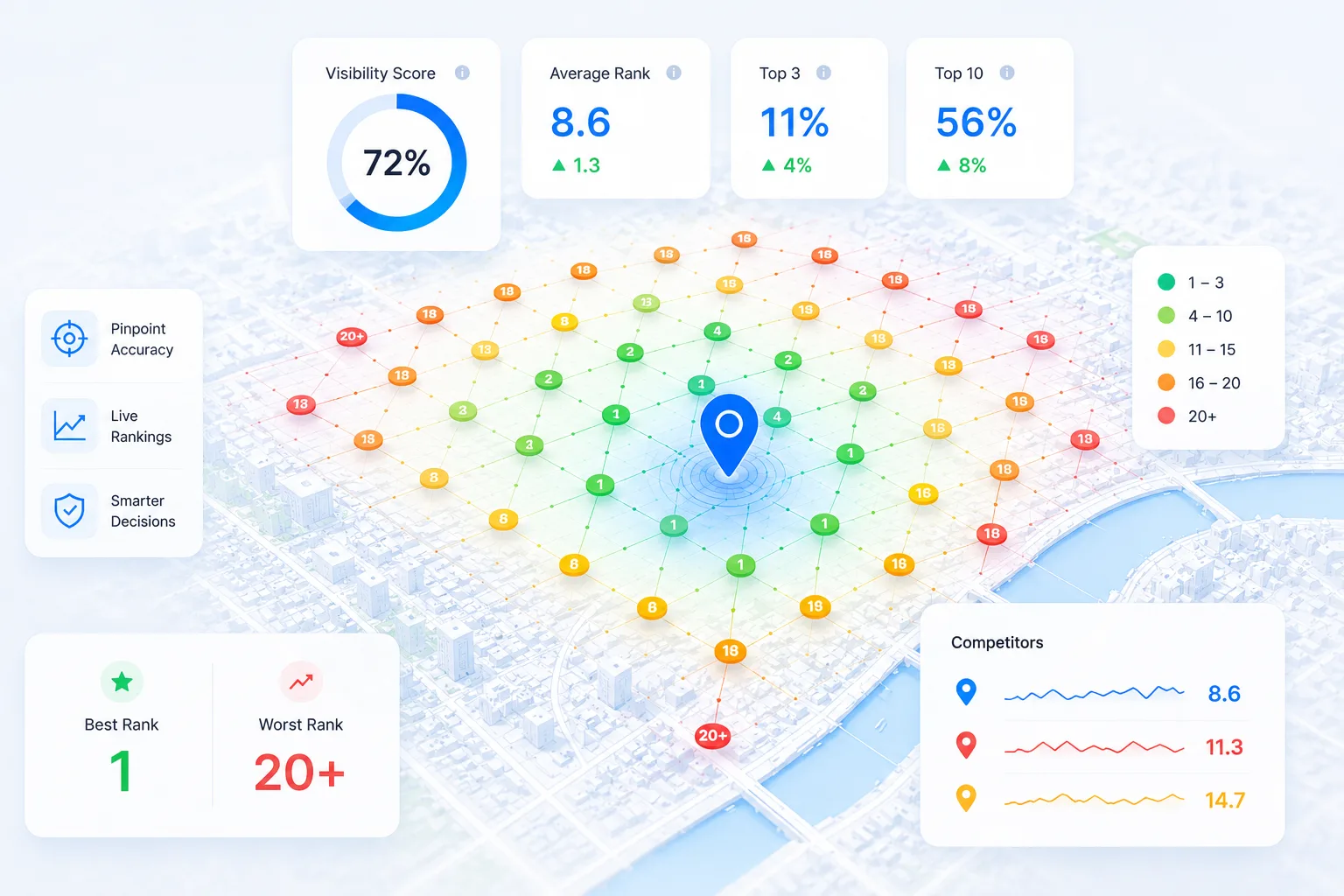
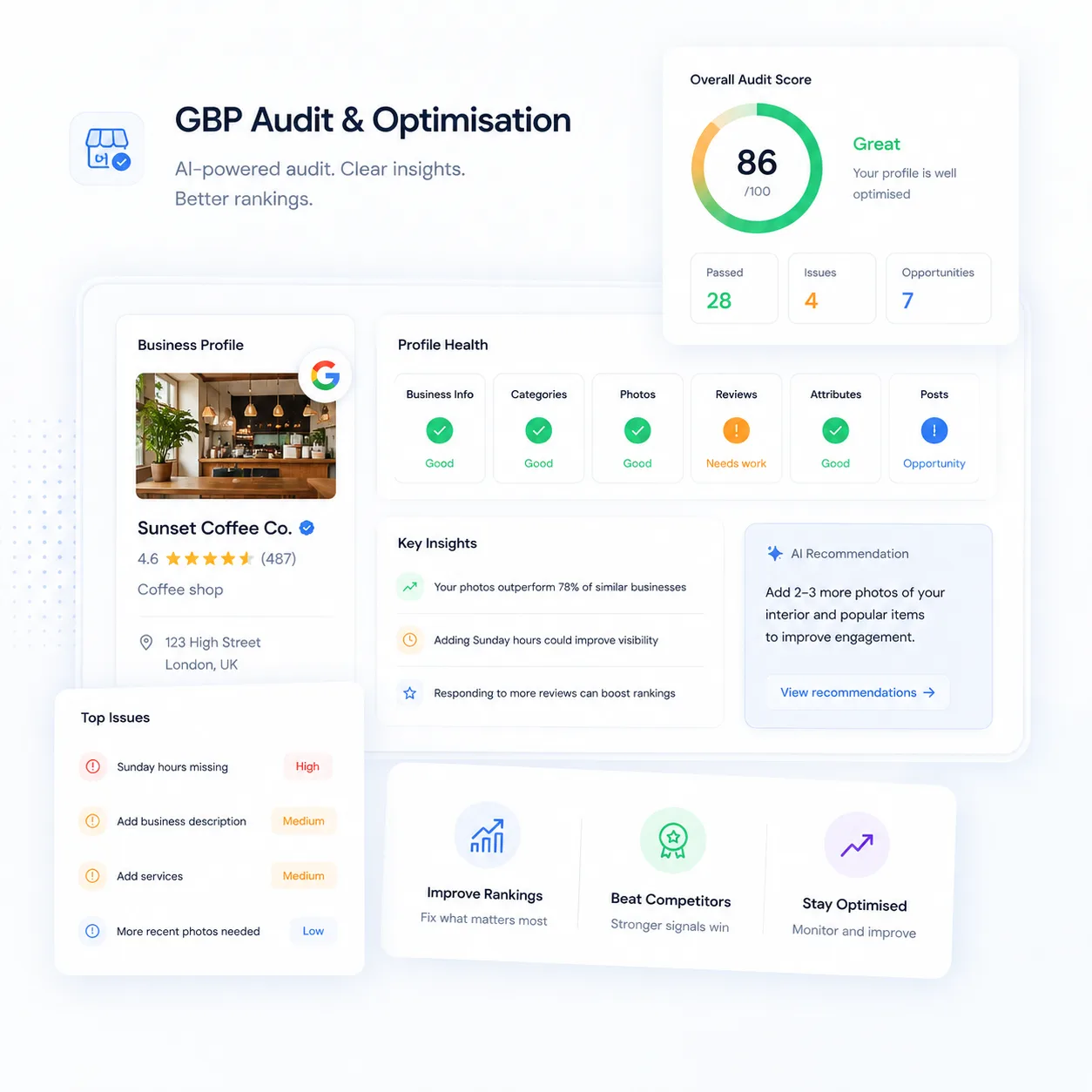
SearchOps was designed to handle unlimited locations without slowing down. You get location-level geo-grid scans with portfolio roll-up reporting, bulk GBP audits across your full estate, and regression alerts that flag which specific branches dropped. Not just that the average moved.
Playbook
Local SEO governance for multi-location brands
The difference between enterprise local SEO that works and enterprise local SEO that feels out of control is governance. Here's the pattern that scales.
- 1
Canonicalise your GBP taxonomy centrally
Pick one primary category and one standardized set of secondaries per brand. Publish it as a single-page document your location managers reference. Run a quarterly audit to find the drift. Consistency is the single biggest local signal at scale.
- 2
Segment locations by performance tier, not geography
Grouping by market tells you nothing you don't already know. Grouping by top-quartile / median / bottom-quartile ranking performance tells you where to spend effort. The bottom quartile is where your ROI on local SEO work lives.
- 3
Build regression alerts at the location level
A 1% drop across 200 locations is a catastrophe hiding as a rounding error. Set thresholds at the individual location. A drop of 3+ places on any top-five keyword triggers an alert to the regional owner. Catch it in days, not quarters.
- 4
Monthly geo-grid scans for your top 10% by revenue
Full geo-grid scans across every location are expensive and mostly redundant. Run them monthly for your top-revenue 10%, quarterly for the next 40%, and biannually for the rest. You'll spend less and surface the same signal.
- 5
Centralise review response policies, not response text
Standardize the policy. Response within 24 hours, no canned text, escalation for anything below three stars. But let local managers write the actual responses. Authenticity scales, scripts don't.
- 6
Benchmark against peer-portfolio, not the category average
Local ranking averages across an industry are so noisy they're meaningless. What matters is whether your 200 locations are beating a comparable 200-location peer. Pick two competitors of similar size, set up side-by-side tracking, and report the delta.
FAQ