Local SEO tooling built for agencies, not retrofitted
You've run this long enough to know where the tooling stack bleeds margin. SearchOps consolidates rank tracking, GBP audits, review monitoring and AI visibility into one platform with unlimited locations, native white-label, full data export, and pricing that doesn't punish you for scaling. You also get the raw data, so your team can run original local SEO studies, publish thought-leadership content that wins pitches, and show clients the kind of insight a PDF never will.

The problem
Tool stacks that work for one client break at fifty
The maths on a four-vendor stack starts fine and compounds into a margin disaster. Per-seat pricing across a rank tracker, a GBP tool, a review platform and whatever the newest AI visibility product is this month scales linearly with your team, not your client count. Meanwhile every client wants one report and you deliver three separate dashboards plus a Friday night copy-paste job.
Per-seat pricing across four vendors compounds aggressively every time you hire. A five-person team on four tools is usually the single largest agency overhead that nobody re-negotiates.
White-label is almost always a premium-tier add-on. Most agencies pay the upgrade fee on every vendor or live with unbranded dashboards going to clients.
Reporting night is three dashboards, a screenshot tool, a Google Doc and a slow Monday morning. The hours lost to this compound across every client on your books.
AI visibility tracking is already a client ask. Buying a fifth tool at agency-seat pricing to answer it is the wrong answer.
The marketing value of your own ranking data is locked inside each vendor's dashboard. You can't build a study, a benchmark, or a thought-leadership piece from someone else's PDF.
How SearchOps fits
Everything that should be built in, is built in
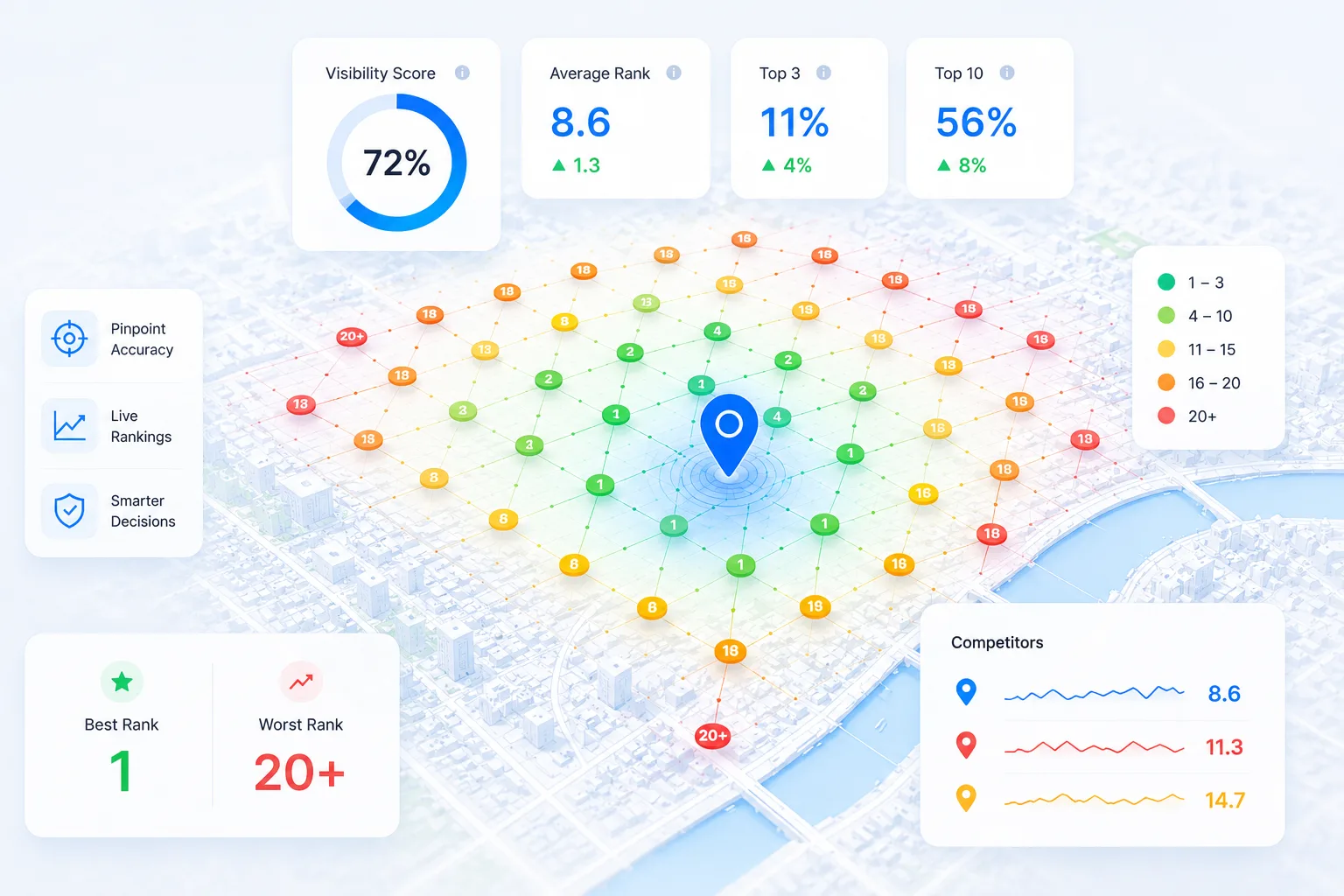
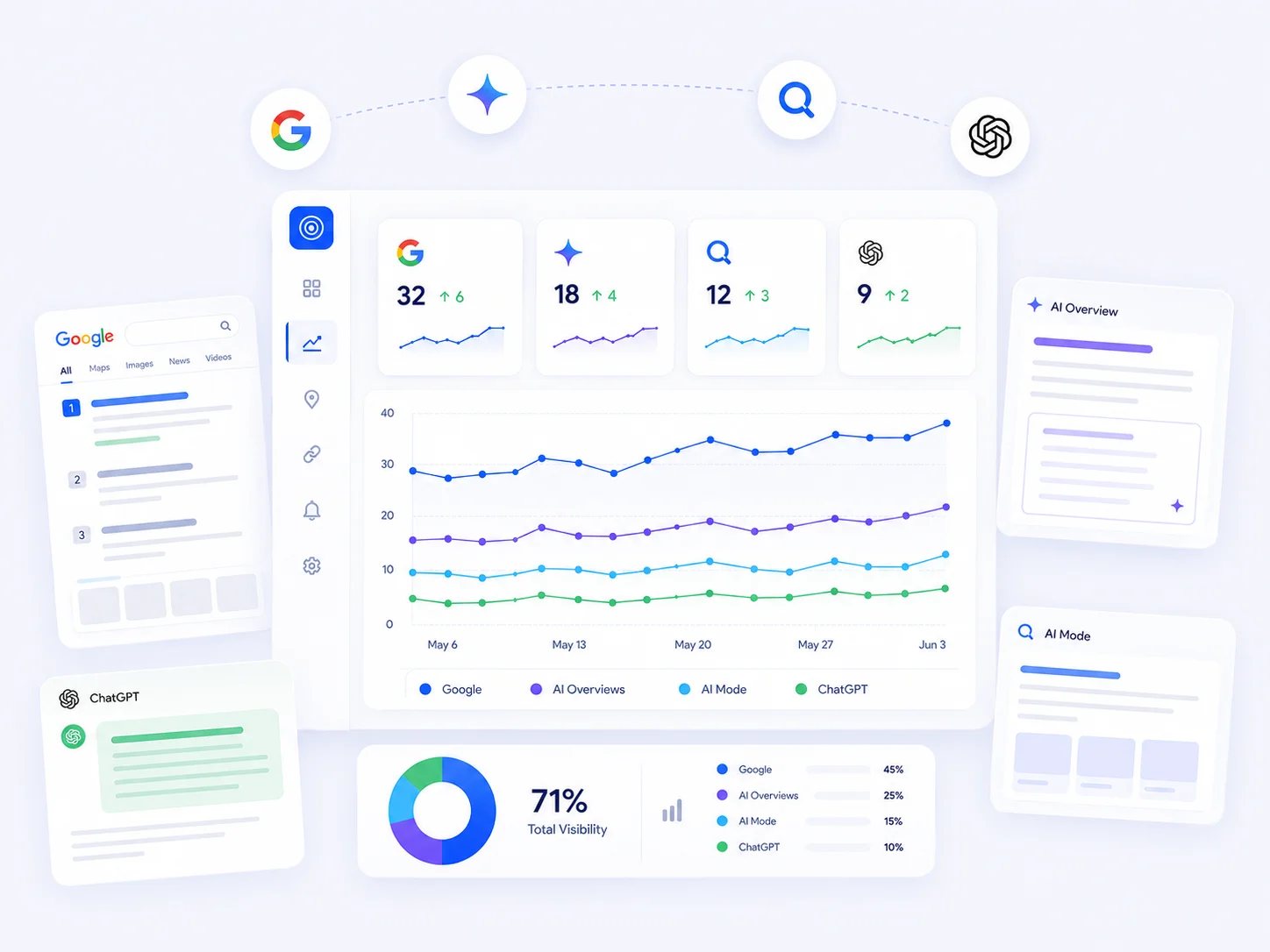
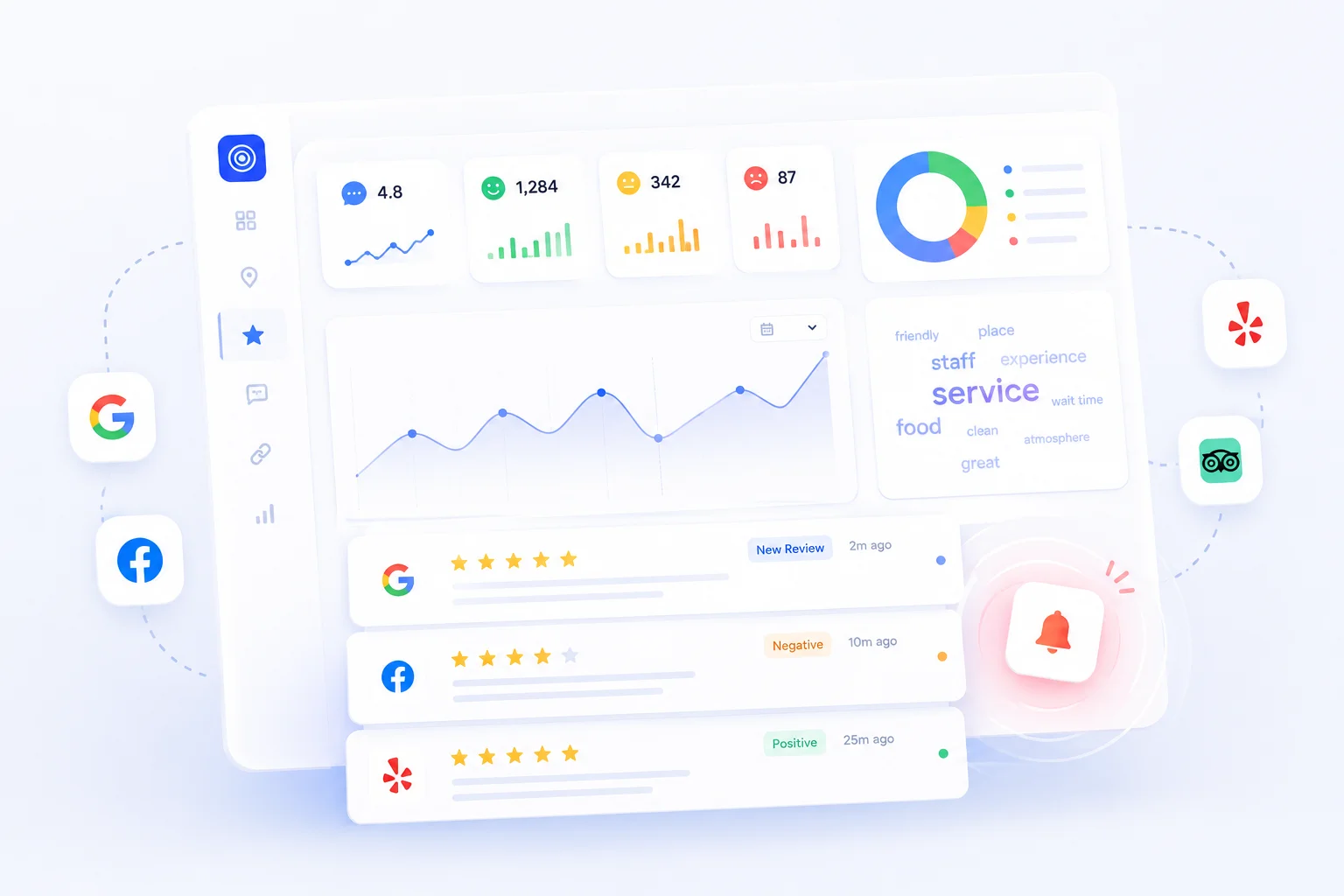
One platform covering geo-grid, GBP audit, SERP and AI visibility, and review monitoring. Unlimited locations on a single credit pool. Native white-label on every plan: your own branded sub-domain and logo on every shared report. Team workspaces with role-based permissions so juniors run scans without touching billing. CSV exports, with a REST API on the roadmap, so your team can feed client dashboards, drop data into BigQuery or Looker, and run original local SEO studies that become the backbone of your thought-leadership content.
Playbook
How modern agencies run local SEO profitably
Most of the below is obvious to a senior SEO. It's here because the gap between a profitable local SEO service line and a loss-making one is operational discipline, not tactics.
- 1
Price per location, not per hour
Hourly pricing caps your margin at your most junior staff's utilisation rate. Per-location pricing decouples revenue from hours and rewards you for tooling investment and process improvement. Start with a three-tier ladder (essentials, managed, premium) priced per location per month; every efficiency gain drops straight to margin.
- 2
Standardize delivery into a 30/60/90 template
Day 1 baseline, week 2 audit readout, month 1 first report with rank movement, month 3 strategy review. A templated delivery arc lets a mid-level SEO onboard a new client in a day instead of a week, and clients know exactly what they're getting each month.
- 3
White-label your reports, down to the sub-domain
Serve your shared client reports from your own branded sub-domain (yourname.searchops.co.uk), put your logo and brand colors on every report, and write SearchOps out of every client-facing string. Clients who experience the reporting as yours are more loyal to your agency than to the underlying tooling. Every time a vendor logo reaches the client, you've added switching cost for yourself, not them.
- 4
Run a scheduled report pipeline, not a manual one
Scheduled scans Sunday overnight. Scheduled report exports Monday 7am. Scheduled email to the client contact Monday 9am. A junior fields any questions. You should never spend a weekday afternoon compiling a local SEO report by hand again once the automation is set up.
- 5
Lead with AI visibility in renewal conversations
AI Overviews and AI Mode are the reason clients feel anxious about local search right now. Arriving with a share-of-voice number across ChatGPT, AI Overviews and traditional SERPs makes you the strategic partner, not the vendor. This wedge alone tends to justify the agency's entire retainer in the client's head.
- 6
Feed client BI stacks with your raw data
Top-tier clients often want a bespoke dashboard that matches their BI stack. Export their rank, audit and review data as CSV and drop it into their Looker, Tableau or BigQuery — moving you up their procurement stack and creating a genuine moat against smaller agencies who can only send PDFs. A programmatic API for real-time pulls is on the roadmap.
- 7
Turn aggregate scan data into original studies
The same dataset that powers your client reporting can drive an industry benchmark, a sector-specific local SEO study, or a ranking-factors report. Agencies that publish original research built on live local-search data out-rank their peers for category terms, get cited by trade press, and convert inbound pitches at a materially higher rate. Anonymise client specifics where you need to; the aggregate picture is genuinely novel because geo-grid data at scale isn't public. One study a quarter is a realistic cadence.
- 8
Run quarterly data reviews as a retention tool
Pull 90 days of a client's ranking, review and AI-visibility data into a single narrative document once a quarter. Not the monthly report, something deeper: trend analysis, seasonality, competitor shifts, the stuff that needs data analysis not dashboards. Clients who get a strategy-grade read on their own data four times a year don't churn. The inputs for this sit in your SearchOps workspace already.
FAQ